IT company · Engineering & design
Software,
made with care.
Made in Hest designs and builds custom software, web platforms and cloud systems that are clear to use and straightforward to maintain.

A small, focused team for software that has to last.
We work with organisations that need software built around how they actually operate — internal tools, customer platforms, integrations between systems, and the infrastructure underneath them.
Our work combines product thinking, interface design and engineering in one process, so decisions about what to build and how to build it are made together rather than handed across teams.
Four disciplines, one delivery process.
01
Software
Custom applications shaped around your processes, not the other way round.
02
Web
Browser-based platforms, dashboards and customer-facing digital products.
03
Design
Research-led interfaces that make complex workflows feel straightforward.
04
Cloud
Infrastructure, deployments and integrations that keep systems connected.

Built for your workflow.
Off-the-shelf tools force compromises. We build applications that model your real processes, data and permissions — from internal operations tools to complete line-of-business systems.
- →Requirements mapped to concrete user journeys
- →Typed, tested codebases with clear architecture
- →Role-based access and audit-friendly data models

Digital products that load fast and scale calmly.
We build web applications, portals and dashboards with attention to performance, accessibility and search visibility, using modern frameworks and server rendering where it helps.
- →Responsive interfaces for mobile, tablet and desktop
- →Accessible markup and keyboard support
- →Performance budgets checked during development
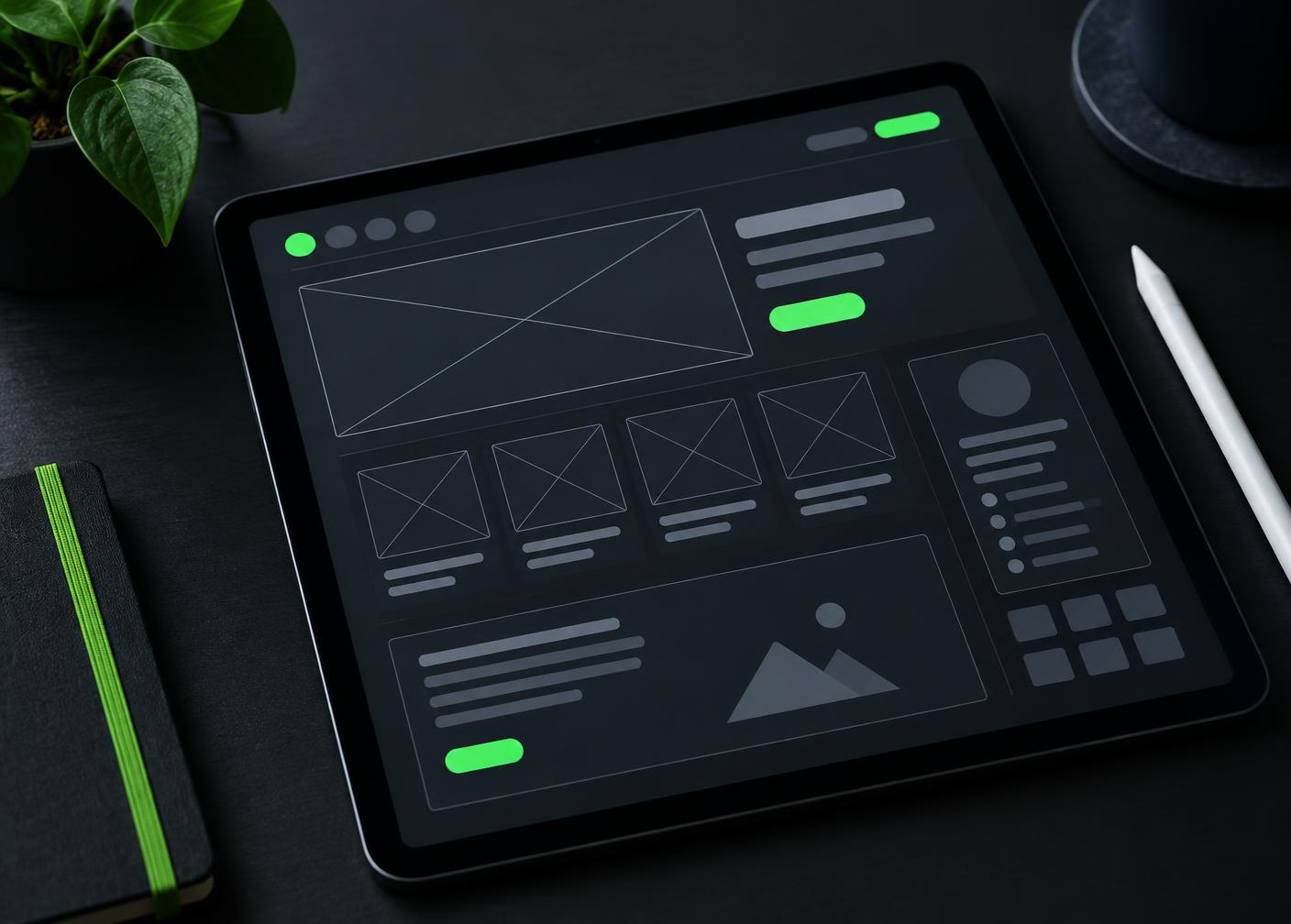
Interfaces that explain themselves.
Design starts with understanding the people who will use the product. We map flows, prototype key screens and test assumptions before committing to engineering.
- →User flows and information architecture
- →Wireframes, prototypes and design systems
- →Hand-off that engineers can build from directly

Infrastructure you can reason about.
We set up cloud environments, CI/CD pipelines and integrations between your systems and third-party services, with an emphasis on observability and predictable costs.
- →Infrastructure defined as code
- →API integrations with payment, CRM and data services
- →Logging, monitoring and alerting from day one
Six stages, visible at every step.
Stage 1
Discover
We clarify goals, users, constraints and what success should look like before estimating anything.
Stage 2
Define
Scope is broken into a prioritised backlog with a technical outline and agreed milestones.
Stage 3
Design
Flows and interfaces are prototyped and reviewed with you before engineering starts.
Stage 4
Build
Work ships in short iterations, each one reviewed, tested and demonstrable.
Stage 5
Launch
Releases are planned with monitoring, rollback paths and documentation in place.
Stage 6
Evolve
After launch we refine based on real usage and maintain the codebase over time.
Principles we hold ourselves to.
- Readable over clever
- Code is written for the next person who has to change it, with consistent conventions and meaningful names.
- Tests where they matter
- Automated tests cover business rules and critical paths; manual exploratory testing covers what automation misses.
- Review everything
- Every change is reviewed before it merges, and releases go through a staging environment first.
- Security as a default
- Least-privilege access, dependency updates and input validation are part of the work, not an extra.
- Accessible by design
- We follow WCAG guidance for contrast, semantics and keyboard use throughout.
- Document decisions
- Architecture choices and their reasons are written down so knowledge is never locked in one head.
Problems we're well placed to help with.
Spreadsheets that outgrew themselves
Manual workflows held together by shared files, copy-paste and tribal knowledge.
Legacy systems nobody wants to touch
Applications that still run the business but are risky to change.
Disconnected tools
Data entered twice because platforms do not talk to each other.
An idea without a product
A validated concept that needs design and engineering to become usable software.
Slow or fragile web platforms
Sites and apps that struggle under load or break with each release.
Unclear infrastructure costs
Cloud environments that grew organically and are hard to reason about.
Working together, plainly.
- One point of contact who knows your project in detail.
- Regular demos of working software, not just status reports.
- Shared backlog so priorities are always visible and adjustable.
- Written summaries after key decisions, so nothing depends on memory.

Questions, answered.
- What kinds of projects do you take on?
- Custom software, web applications, product design, API and third-party integrations, cloud work, and maintenance of existing systems. Projects can be new builds or improvements to software you already run.
- Can you work with our existing codebase?
- Yes. We usually start with a technical review to understand the architecture, risks and quick wins, then agree on a plan for changes.
- How is a project scoped?
- We begin with a discovery conversation, then propose a scope, milestones and delivery approach in writing. Larger projects are split into phases so decisions can be revisited as you learn.
- Who owns the code?
- Ownership terms are agreed in writing before work starts. Our default intent is that you receive the source code and documentation for the work you commission.
- Do you provide support after launch?
- We offer ongoing maintenance and improvement work, including dependency updates, bug fixes, monitoring and incremental features.
- How do we start?
- Send an email describing your project, goals and any constraints. We will reply to arrange a conversation.
12 · Contact
Have a project in mind? Tell us about it.
ais0837958530@gmail.com